Cannes Lions International Festival of Creativity just hosted its 72nd annual gathering in Cannes, France. The festival is the world’s largest global convention for creatives in the fields of advertising and communications. Each year, marketers across the world gather to celebrate the creativity and accomplishments of the industry and offer insights into the trends defining its future.
One of this year’s standout topics was health. Perhaps that isn’t surprising – last year, in 2024, health and pharma ad spending was estimated to hit an astounding $30 billion. As the healthcare industry increasingly adapts to the age of digital advertising, it’s only natural that we begin to see wildly successful campaigns arising from that shift.
What’s perhaps a bit more surprising is why these creative endeavors earned the prestigious Cannes Lions spotlight. The secret ingredients: Creativity, boldness, and the strategic use of humor and humanity, all blended to create some truly special campaigns.
The Shift Towards Empathy and Relatability in Health Marketing
Contemporary audiences, particularly younger demographics, respond more positively to messages that are authentic and emotionally mindful. Modern approaches to the health marketing formula humanize health issues and foster connections with audiences based on relatability rather than stern clinical authority. Some stellar examples of this approach were featured at Cannes Lions 2025, including award-winning campaigns from the New Zealand Herpes Foundation and pharma company Biogen, among many others.
Did you know that New Zealand is “the best place in the world to have herpes?” That bold statement is the focal point of the 2024 awareness campaign from the New Zealand Herpes Foundation (NZHF) with the help of agencies Motion Sickness and FINCH. With the noble aim to reduce stigma and educate audiences about managing herpes, the campaign went on to win the Grand Prix for Good at Cannes Lions this year.
It combines audacious messaging backed up by hard data, all superimposed over placid New Zealand imagery of rolling hills and fields of sheep. It’s also interactive, inviting site visitors to test and expand their knowledge with short video courses and featuring a leaderboard of participants’ countries. By blending humor with compassion, the campaign invites us follow its lead in destigmatizing herpes, initiating a conversation that will break down taboos.
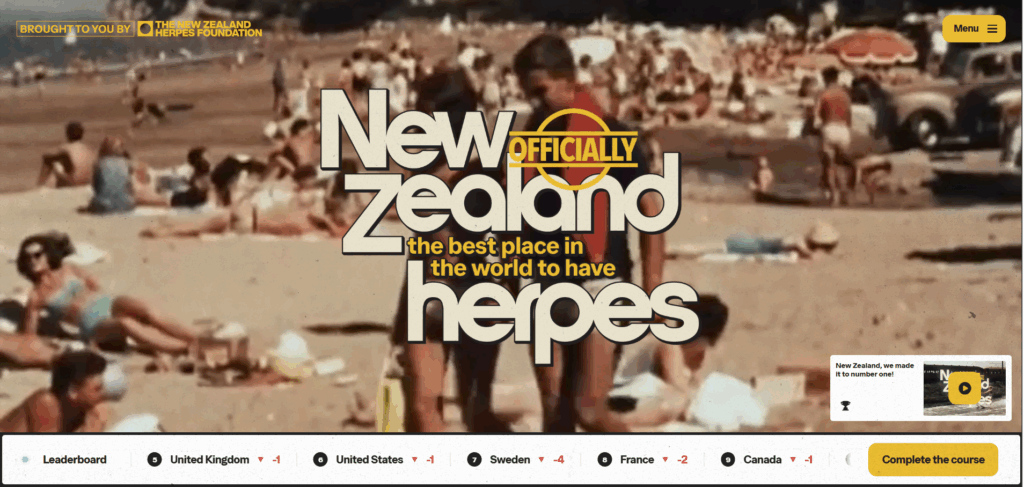
thebestplaceintheworldtohaveherpes.com / New Zealand Herpes Foundation
Embracing Empathy in Health Campaigns
When used carefully, humor and compassion can make for very effective tools to connect with audiences. However, this approach isn’t often explored in pharma due to the sensitivity of illness and disease. It’s much more common for a drug ad to make you feel nothing at all or even leave you feeling a bit depressed. The blandness of traditional pharma ads is a self-fulfilling prophecy of sorts. Like the agency 21GRAMS puts it, “Neutrality and Sadness, not surprisingly, are not the ideal emotional states to inspire action or behavior change.”
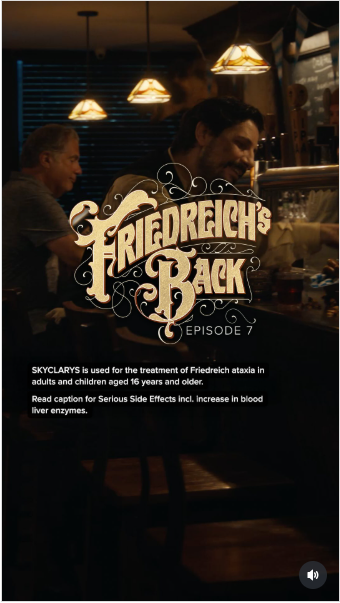
Cue the campaign that would go on to win a Gold Pharma Lion from Cannes Lions this year from Biogen and 21GRAMS for Skyclarys. The drug is Biogen’s treatment for Friedrich’s ataxia (FA), a rare inherited disease causing progressive neurodegeneration that affects just 15,000 people worldwide.
The campaign, a nine-part series posted to Biogen’s Instagram and TikTok pages, begins with Nikolaus Friedrich (the neuroscientist who discovered FA) rising from the grave to discover that he now has a disease named after him. The lighthearted series follows Friedrich (or “Nik”) as he clumsily adapts to the modern world, still clad in his anachronistic Victorian garb. During these escapades he meets a young Biogen scientist, Izzy, who teaches him about Skyclarys.
When 21GRAMS took the stage at Cannes Lions for a session on the campaign, titled “Laughing at Doom: Using Humor to Talk about Illness/Hellscapes,” they were joined by Fiona Cauley, a comedian who lives with FA and worked with the team in developing the campaign. According to Sundip Ravel, Biogen’s Head of Marketing for Rare Diseases, the company’s decision to market using humor was spurred by Cauley’s bold statement: “I laugh because I’ve cried enough.”
Walking the Fine Line
One of the factors that makes these campaigns so effective is that they don’t take themselves too seriously but are also mindful not to make a mockery of the conditions they are discussing. The New Zealand Herpes Foundation’s campaign succeeded by using satire to challenge stigma without trivializing the condition. Biogen’s campaign managed to shed light on a rare disease without relying on the doom-and-gloom approach of traditional pharma ads. Strategically harnessing humor has many benefits, like reducing stigma, fostering empathy, and increasing shareability.
I mention “strategic” and “mindful” because, in contrast, humor can backfire if it trivializes serious conditions or feels tone-deaf. Some campaigns of yesteryear have made this mistake, which creates the wrong kind of buzz about a topic even if the hearts of the creators were in the right place.
Think back on Mexico City’s breastfeeding campaign, for example. Aiming to encourage women to breastfeed, the ads featured toned, topless actresses with banners over their chests reading the slogan “Don’t turn your back on them … Give them your breast.” While the campaign had succeeded in going viral with a bold message and a sense of humor, it didn’t have the desired outcome with its target audience.
The campaign was criticized for sexualizing women and implying that women who did not breastfeed had “turned their backs” on their babies. For new mothers who had just given birth, the imagery of lean, toned bodies didn’t connect. The message, though well-intentioned, wasn’t received warmly. This is why it’s so important to keep a finger on the pulse of culture, and to consult with members of the audience the campaign wants to connect with.
Lessons for Health Marketers
The 2025 Cannes Lions Festival made one thing clear: Campaigns that lean into humanity, authenticity, and humor are shifting the culture of health marketing. But the festival also underscored the importance of getting the balance right. Humor can open the door to conversations people might otherwise avoid, but if it feels careless or disconnected, it can quickly shut those conversations down. Empathy must guide every creative decision, ensuring that messages don’t trivialize serious issues but instead help audiences see themselves in the story.
The campaigns that stood out at Cannes this year remind us that health marketing is not just about changing behaviors but changing conversations. By leaning into humor and compassion in ways that are informed by the audiences they wish to connect to, brands and organizations are creating health campaigns that are inspiring and empowering.