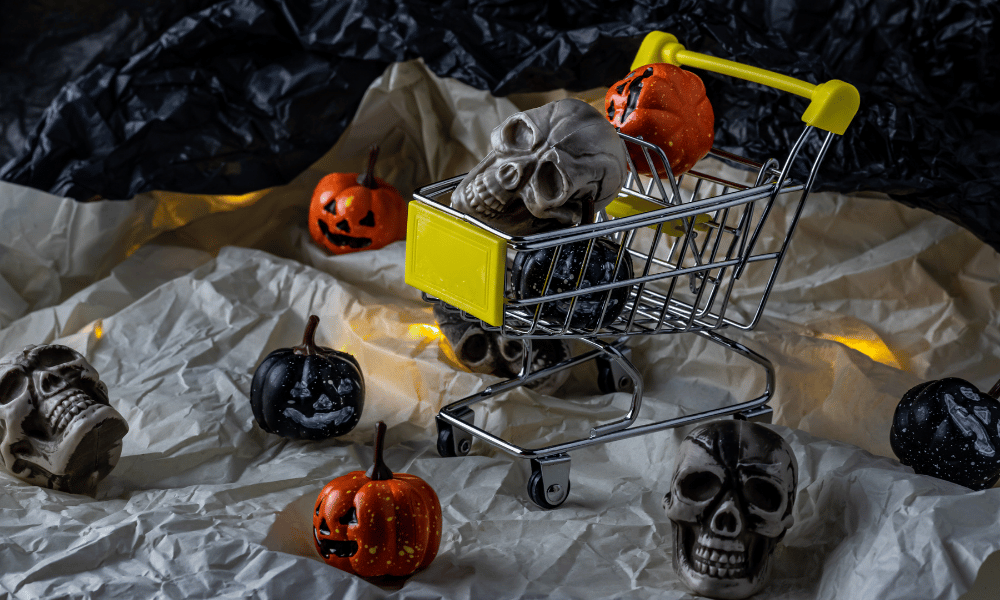
For years, holidays have crept ever forward on the retail calendar. That’s never been more apparent than this Halloween, as large retailers began introducing seasonal stock in June and July, well before the traditional late summer ramp-up.
This year’s “Halloween in July” timeline has been dictated less by consumer demand and more by tariffs. It’s a case study in what happens when trade policy shapes the holiday calendar, forcing brands to rethink how and when they engage shoppers. The early arrival of Halloween this year is as much a hedge against trade risk as it is a marketing strategy.
Under new trade policies, the U.S. closed its de minimis exemptions and imposed steep duties on imports, including a 20% tariff on goods from China, where a large share of Halloween products are manufactured. For categories that depend heavily on seasonal imports, this meant higher costs and potential supply volatility. The new tariff structure raised costs across imported goods, particularly seasonal items produced in Asia.
This year’s Halloween illustrates clearly how trade policy shapes the holiday calendar, compressing supply chains and extending the consumer season. By putting seasonal products on shelves early, retailers like Home Depot, Lowe’s, Walmart, and Spirit Halloween secured inventory ahead of the increases. Rather than letting that inventory lay dormant into the fall, they opted to move that product onto shelves early.
The implications for marketers are significant. An extended Halloween season is changing the rhythm of campaigns. Instead of condensing everything into a frantic October push, there’s now room to pace the holiday season over several months. That may well prove true for the upcoming Christmas season, too.
Early product drops allow brands to test creative themes and generate buzz with limited releases, while later phases can lean on urgency and scarcity to drive last-minute sales. The lengthened season also spreads out consumer purchasing behavior: Decorations and novelty items may sell in midsummer, costumes pick up in September, and candy dominates in October. Each of these moments gives marketers another opportunity to engage audiences.
Equally important is how these changes intersect with culture. TikTok’s celebration of “Summerween” demonstrates how consumers, especially Gen Z, are eager to treat Halloween as a months-long occasion. When consumers are willing to start celebrating early, and when retailers are incentivized to meet that enthusiasm with early stock, the smartest campaigns will treat that expanded window not as a quirk, but as an advantage.
For marketers, the lesson is that holiday timelines are no longer fixed. They are shaped by economic realities like tariffs and by cultural participation cycles. The Summerween trend this year is an example of how campaigns can respond when trade policy reshapes the holiday calendar. This means spreading messaging across a longer window and finding ways to maintain relevance across multiple buying cycles.
Marketers who adapt quickly can turn those shifts into extended visibility and deeper engagement. In other words, tariffs may have set the stage, but how brands use the extra time will determine who wins the season.