
Chasing trends is easy. Bringing them to life is markedly less simple. Brands act on trends all the time, capitalizing on what’s already popular. In contrast, to bring a trend to life is to take a new trend and define it through the lens of your brand and its audience. That interpretation can take many forms, from product innovation to content creation and beyond.
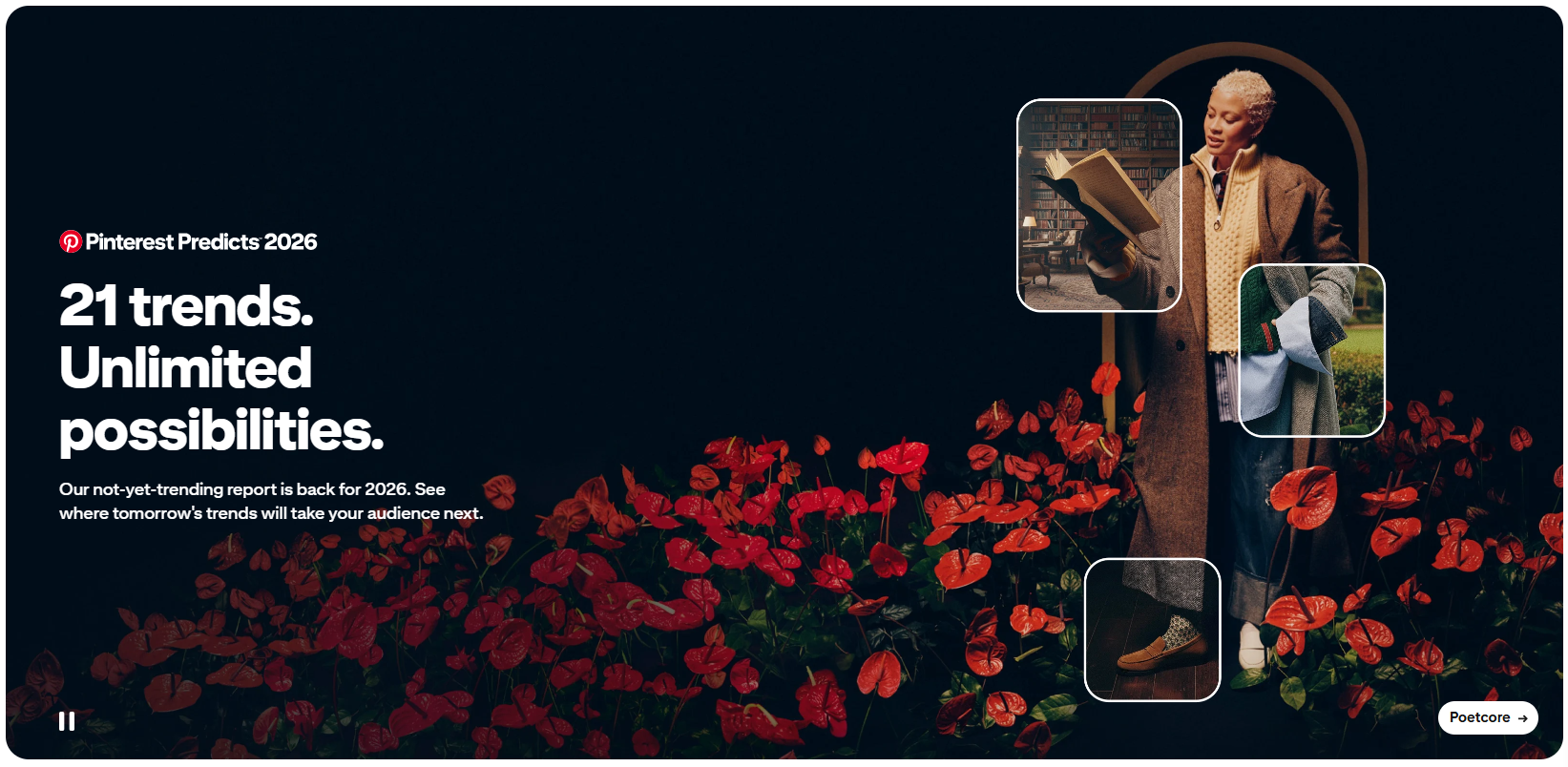
Built on rising search queries and cultural momentum, the 2026 Pinterest Predicts report highlights 21 trends expected to see significant engagement in the year ahead, drawn from the platform’s uniquely forward-looking behavior. Alongside the report is the accompanying Guide to Pinterest Predicts 2026, which focuses on how businesses can act on rising trends. The guide outlines considerations and approaches designed to help brands realize trends across the marketing funnel.
With data from Pinterest Predicts, Marketing 411 breaks down how brands can move beyond participating in what’s trending to influencing how those trends are realized on the market.
Choosing the Right Trends for Your Business
Not all of the trends spotlighted in Pinterest Predicts 2026 will make sense for every brand. They work best when they intersect with your brand’s identity and product ecosystem rather than just being adopted wholesale. To this end, the report includes a wide range behaviors and aesthetics gaining traction, from maximalist fashion and new lifestyle rituals to Afro-Bohemian home décor inspo and mystical travel destinations. A trend like Gimme Gummy might naturally lend itself to brands with playful, sensory-rich offerings where texture, color, and touch are central to the experience. By contrast, a trend like Poetcore might find its niche among brands with elegant aesthetics or stories rooted in craftsmanship or heritage.
When choosing which trends to pursue, start by asking whether a trend naturally expresses something about your brand’s values, tone, or offerings. It doesn’t need to match you perfectly to be useful, but there should be an intuitive logic to why you’re leaning into it. Ask yourself where that intent overlaps with your category and where it could introduce your brand into a new phase of relevance or resonance.
Then, consider how to flesh out the trend in ways that feel cohesive. Think across touchpoints like product development, content partnerships, owned channels, paid activations. Done this way, hopping on a trend is less about chasing what’s buzzworthy and more about choosing cultural currents that help your marketing flow with your audience and brand truth.
Building Trends Into Your Operating Strategy
Once you’ve identified the right cultural current for your brand, the next step is deciding what role it should play in your growth plans. Is it a short-term campaign hook, a seasonal merchandising driver, a content pillar, or the seed of a longer-term product evolution? Pinterest’s guide suggests using trend insights to inform everything from creative briefs and shopping ads to keyword targeting and in-store activations.
The disciplined approach is to treat each trend as a hypothesis. If search behavior around something like “opalescent” suggests an appetite for luminous designs, does that translate into an opportunity to introduce luxury elements into your offering? If “adventure tourism” is gaining traction, is there whitespace for your brand to speak to a more experiential consumer mindset? Trends can sharpen strategy when they help you refine who you’re targeting, what problem you’re solving, or how you’re differentiating.
Owning the Trend, Not Just Using It
There’s a difference between participating in a trend and setting the standard for it in your category. Activation can be as light as borrowing a color palette or referencing a visual cue. But to bring a trend to life is to define what a trend looks like through your brand. It isn’t enough just to borrow a few visual elements. Ownership requires a more expansive creative vision, deciding how your brand will interpret a trend in a way that feels additive rather than simply derivative.
Owning a trend means steering a trend to places audiences may not expect, while still anchoring it in what a brand can realistically deliver. To expand trends beyond their original scope, brands have to think across categories. Pinterest’s guide illustrates this with a few hints: Cool Blue doesn’t have to live solely on the runway, and Scent Stacking isn’t limited to fragrance counters.
But we can expand on that. Cabbage Crush might originate in food culture, but a home brand can expand that momentum through produce-inspired palettes or unexpected designs that prompt audiences to reimagine how the trend appears beyond the dinner plate. Opera Aesthetic is built on drama and grandeur, elements a travel company can turn into unique storytelling and curated experiences structured around iconic opera cities. Trends travel, and the brands that stand out are the ones willing to carry them somewhere new.
Read the Pinterest Predicts report here: https://business.pinterest.com/pinterest-predicts/
Read the Guide to Pinterest Predicts here: https://business.pinterest.com/pinterest-predicts/for-businesses/