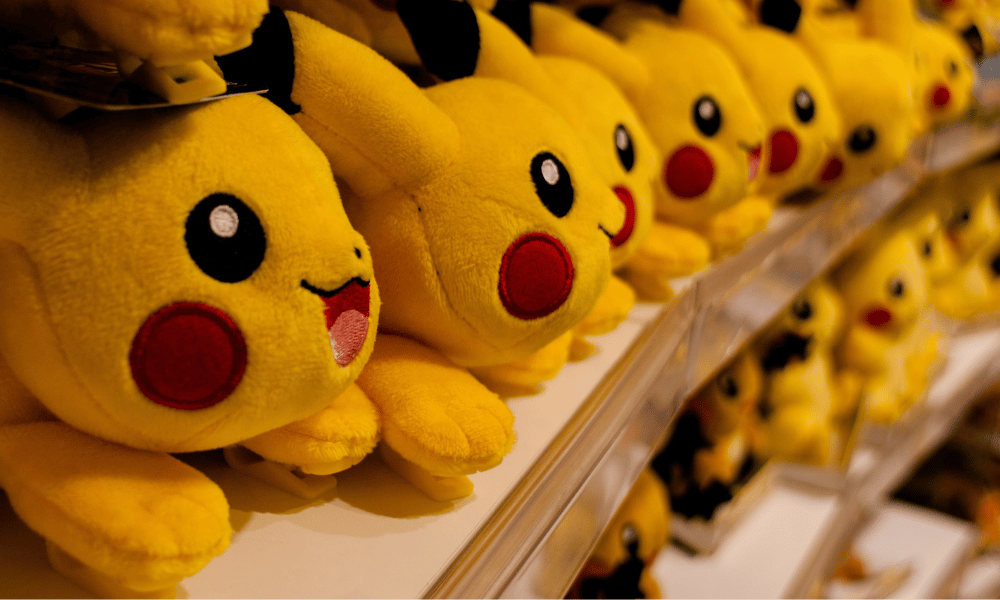
The lasting impact and cultural reach of Pokémon is something that most brands aspire to, yet few ever reach. Now celebrating its 30th anniversary since Pokémon Red and Green (or Red and Blue in the states) launched in 1996 as a pair of Game Boy titles, the franchise has evolved (pun intended) into one of the most valuable and expansive media franchises in the world. Its sprawling media empire now encompasses video games, trading cards, e-sports tournaments, television and film adaptations, merchandise, live events, and a dedicated fanbase spanning the entire globe. Clearly, the pop culture phenomenon shows no signs of slowing down.
Marketing 411 examines how Pokémon is approaching its 30th anniversary campaign and what marketers can learn from the brand’s enduring legacy.
The 30th Anniversary Campaign: Coordinated, Not Commemorative
Pokémon’s 30th anniversary isn’t centered on a product release or a nostalgic retrospective, though it certainly does incorporate those elements. Instead, The Pokémon Company International has unveiled the “What’s Your Favorite?” campaign, a yearlong celebration of the franchise and its fans. In a press release detailing the campaign, Pokémon Company president Kenji Okubo said,
“The ‘What’s Your Favorite?’ campaign embodies Pokémon’s overarching mission of bringing people together through a shared love of Pokémon. Since the franchise debuted 30 years ago, Trainers have often asked each other, ‘What’s Your Favorite?’ — it’s a question that sparks passionate discussion and reminds fans that no matter who they are, there is a Pokémon for them.”
This campaign kicked off (again, pun intended) during Super Bowl LX with a commercial featuring stars such as Lady Gaga, Trevor Noah, Jisoo, and many more revealing their favorite Pokémon. A special anniversary-themed site invites trainers to participate in the celebration by sharing snapshots of their favorites in the Pokémon Go app, which also celebrates its 10th anniversary this year.
In addition to digital engagement the festivities include community-focused events tailored to different audience segments and a full year of anniversary-themed announcements and merchandise drops.
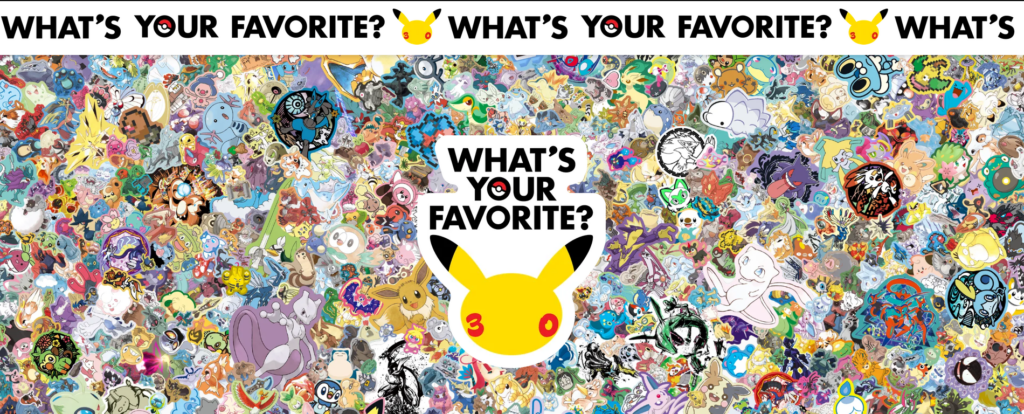
What makes this campaign notable is the way Pokémon leverages the franchise’s cultural impact to make the milestone a participatory experience for fans, rather than a static commemoration. The campaign’s central unifying theme (What’s Your Favorite?) has an emotional, personalized appeal that works across generations and platforms, encouraging fans to contribute content and attend experiences throughout the year. This is how a massive global franchise still manages to feel like a community.
The Architecture of a 30-Year Brand
The anniversary campaign works because it sits on top of unusually strong brand architecture.
Pokémon’s lasting appeal spans generations. For many fans, the franchise is tied to early formative experiences. I can recall fond memories of playing Pokémon Sapphire, my entry into the series, as a kid in 2003. I still keep up with the games today, over 20 years later, and share my enthusiasm for the series with my young niece. That multigenerational appeal contributes heavily to the franchise’s longevity. As a brand, Pokémon continuously refreshes itself through new generations of players, preventing stagnation. Those emotional anchors create loyalty that can create hype during milestone campaigns.
At the core of Pokémon is one of the simplest, most expandable value propositions in entertainment: catch, train, battle. That loop is instantly understandable, yet endlessly extensible. New Pokémon species, new regions, and new mechanics can be layered in without disrupting the foundation. The simplicity of the core creates room for innovation.
Beyond the gameplay loop, Pokémon functions as a consistent universe with storytelling that appeals to children and adults alike. Over three decades, it has built an empire with recognizable characters and a stable emotional tone centered on growth, exploration, and friendship. Pikachu may be the brand’s global ambassador, but its cast now contains over 1,000 Pokémon species and many recognizable human characters that add to the franchise’s variety without becoming unfocused.
A Case Study in Coordinated Brand Building
Pokémon’s media empire is also a standout example of interconnected media and brant assets. The video games aren’t isolated products. They introduce creatures and regions that appear in the anime. The anime strengthens emotional narratives that elevate character demand in the trading card game. The trading card game encourages collectability and competition, which fuels merchandise sales and community events. Each medium strengthens the others rather than competing with them.
Nostalgia plays a role in that system, but it isn’t the foundation. The anniversary celebration integrates legacy elements while introducing new ones. Familiarity re-engages existing audiences; novelty attracts new ones. Both are necessary for lasting relevance.
That’s what makes milestone moments like a 30th anniversary strategically valuable. They are opportunities to establish a narrative around product, media, retail, and community efforts. Rather than treating milestones as decorative celebrations, brands can use them to concentrate attention across platforms.
The secret to Pokémon’s longevity isn’t simply its popularity. It’s the outcome of brand storytelling and deliberate coordination across channels. And for marketers, that coordination is the part worth studying as the catalyst for its cultural footprint.